Loading
Utility Header Logo
Plex Community
Change Country Site SelectionChange RockwellAutomation.com site selection to a different country, region or language
Plex, a Rockwell Automation Company logo
Products
Manufacturing Execution System (MES)
Manufacturing Execution Suite (MES) is a comprehensive manufacturing software solution that provides real-time, paperless production management to drive enterprise-wide compliance, quality, and efficiency.
Quality Management System (QMS)
Quality Management System (QMS) is a cloud-based digital quality solution for manufacturers that standardizes and automates quality documentation, processes, and measurements.
Enterprise Resource Planning (ERP)
Enterprise Resource Planning (ERP) is a full-featured, scalable, cloudbased ERP that automates front- and back-office processes.
Supply Chain Planning (SCP)
Supply Chain Planning (SCP) combines data from your Plex ERP and multiple departments across your business to sync up demand and supply planning to improve inventory accuracy and production management.
Connected Worker
Connected Worker empowers frontline manufacturing teams with real-time digital tools to improve productivity, reduce errors, and enhance collaboration. It connects your people, to purpose, people, productivity, and processes to drive continuous improvement and workforce agility on the shop floor.
Production Monitoring
Production Monitoring provides seamless connectivity to machines on the plant floor, delivering transparent, real-time operational KPIs and dashboards to drive continuous improvements.
MES Automation & Orchestration
MES Automation & Orchestration connects your Plex MES to the plant edge to control information flow, processes, and workcenter setup adding efficiency, saving costs, and eliminating manual errors.
Asset Performance Management (APM)
Asset Performance Management (APM) combines process, operational, and machine-level data through highly visual dashboards to proactively monitor machine and plant health to ensure optimal uptime, throughput, and maintenance needs.
Finite Scheduler
Finite Scheduler is an advanced production scheduling tool that helps manufacturers optimize resources, reduce bottlenecks, and improve on-time delivery. It enables dynamic, constraint-based scheduling to align operations with real-world capacity and demand
Platform
Smart Manufacturing Platform Overview
Discover how our integrated platform connects, automates, tracks, and analyzes your operations.
Cloud Infrastructure & Security
Enterprise-grade cloud infrastructure with industry-leading security and compliance.
Reporting & Analytics
Integrated data visualization and analytics platform enabling descriptive, diagnostic and predictive business insights with Plex.
Availability & Performance
Industry-leading uptime and performance with 99.5% availability guarantee.
Manufacturing Automation
Seamless integration with Rockwell Automation and other manufacturing systems.
Mobile Application
Access critical manufacturing data and controls from anywhere with our mobile apps.
Industries
Aerospace Auto and Tire Food & Beverage Industrial Manufacturing Plastics & Rubber Precision Metalforming
Plex MES for Automotive
Plex Interactive Demo
INTERACTIVE DEMO
Plex MES for Automotive

Gain Real-Time Visibility and Control of Your Operations

Try Now
Resources
All Resources Success Stories Analyst Reports Knowledge Articles Demos Blog
2025 Gartner® Market Guide for Manufacturing Execution Systems
Plex Generic Dark Background
Analyst Report
2025 Gartner® Market Guide for Manufacturing Execution Systems
Read More
TALK TO US
SEE A DEMO
Log In Plex Manufacturing Cloud Plex Classic
TALK TO US
SEE A DEMO
Blog
Recent ActivityRecent Activity

8 Steps to Prepare Your Manufacturing Operations for AI

Share This:

LinkedInLinkedIn
XX
FacebookFacebook
PrintPrint
EmailEmail
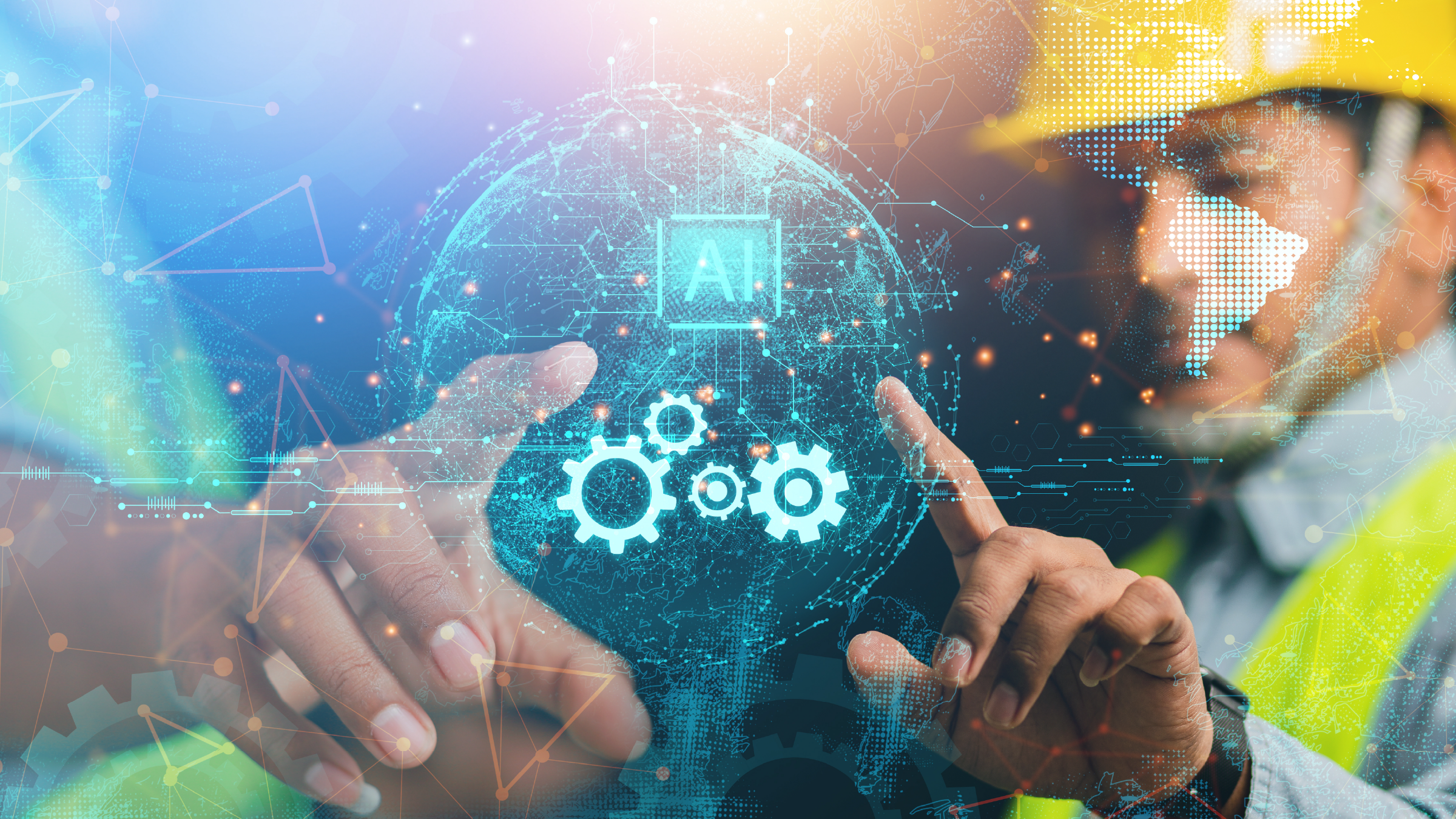
Digital illustration of AI in manufacturing, showing a connected globe with data networks, gears, and a worker interacting with a virtual interface

AI is identified as a potential solution for many challenges that manufacturers are facing – labor shortages, skills gaps, quality control, and managing external pressures. According to our 2026 State of Smart Manufacturing, nearly half of manufacturers surveyed ranked AI and machine learning (ML) as the top outcome driver over the next 5 years. And yet, the shifting global landscape and fast-moving technologies like AI/ML can feel disruptive.

As operational complexity increases and the business and geopolitical climate continue to change, manufacturers are emphasizing risk reduction. Manufacturers need solutions that combine automation, AI, and secure architectures from edge to cloud to optimize operations and reduce exposure to cyber, compliance, and operational risk, while building the resilience needed to navigate uncertainty with confidence.

Progressing your digital maturation
Infographic view

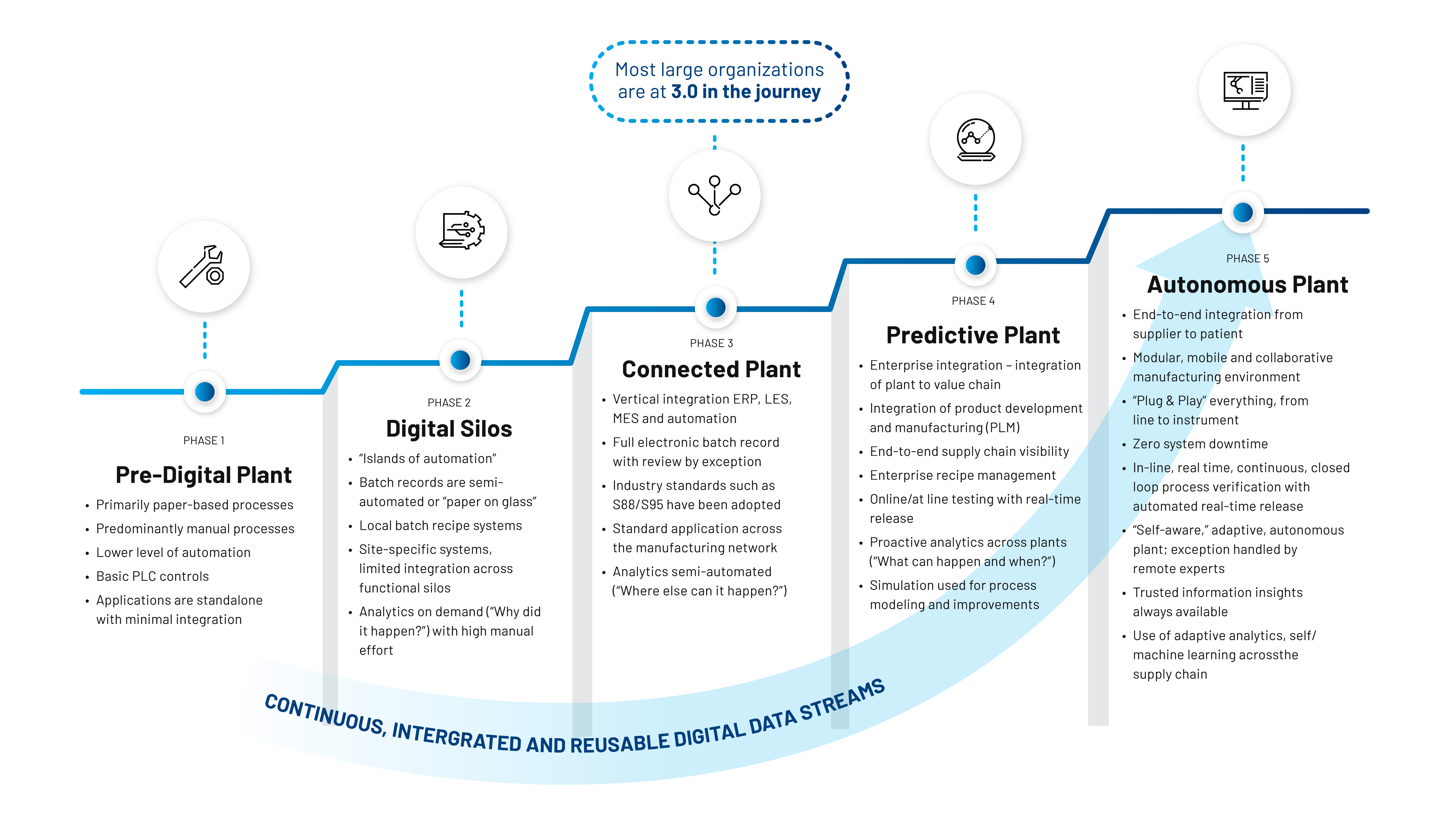
This is the digital maturity journey that manufacturers are navigating today. Most large organizations are still sitting around Phase 3— the ‘Connected Plant’ – which means they’ve begun integrating systems like ERP, MES, and automation. They’ve moved off paper. They have visibility across parts of their operations, but there’s still heavy reliance on manual decision-making, disconnected data, and reactive processes.

The difference between the ‘Connected Plant’ and one that enables predictive operations is huge – analytics guide decisions proactively, supply chain visibility is real-time, and digital twins help model outcomes before they happen. And ultimately, autonomous operations, where systems are modular, closed-loop, and capable of self-optimizing with minimal intervention.

This shift is about more than just technology. It’s about enabling faster response times, higher resilience, better quality, and less downtime.

Taking steps today to be ready for AI

Most plants are still running—or still investing in—systems built for earlier generations of manufacturing: recordkeeping systems, control-focused systems, siloed point tools, or platforms that require heavy customization just to work. 

These systems served their purpose, but they were never designed for what manufacturers need today: autonomy, interoperability, distributed intelligence, and AI-driven operations. Imagine having AI woven into every layer of your business:

  • Working in your business by empowering the frontline with AI-powered workflows that reduce errors, streamline production, and elevate day‑to‑day performance.
  • Working on your business by empowering leaders with operational intelligence to drive strategic decisions, unlock capacity, and accelerate continuous improvement.
  • Working with your business by empowering IT partners to rapidly build and deploy solutions that accelerate time‑to‑value and lower the total cost of ownership.

So, what is truly needed to make the shift to more elastic solutions that can put you on the path toward autonomous operations?

  1. Prove value vs. technology: Technology works. Find and prioritize specific digital use cases that solve manufacturing and operational issues.
  2. Investments with a short-term payback: Transformations stall when ROI is slow. Build rapid, steady flow of value to drive adoption and self-funding.
  3. Plan for scalability: To deliver desired outcomes at scale, plan for the optimal set of technologies with integration to the existing backbone. Focus on common work processes across the enterprise.
  4. Foster enterprise collaboration: Siloed solutions are a dead end. Enterprise (OT / IT) digital connectivity and collaboration unlock exponential value.
  5. Learn, iterate and improve: Long-term planning helps, but inflexibility can mean missed opportunities. Keep an eye on your digital vision while learning and adjusting your strategy and execution to build on proven value as it emerges.
  6. Communicate progress and success: Momentum matters. Spread the word beyond the impacted group to build and maintain excitement for what’s possible.
  7. Define and apply governance: Protect sustained value. Embrace new ways of working, including adherence to process and data standards.
  8. Equip and champion people: To get ROI from digital, empower people beyond introduction of new technology. Skills and mindsets that support new ways of working are key to success and driving self-service. 

The future starts now

The potential of the future of industrial operations is exciting – and the future is happening right now. Manufacturers are moving from automation to autonomy. From systems that are programmed to systems that learn, fueled by the evolution of AI, robotics, and other industrial tech; systems that anticipate needs, solve problems, and continuously improve without human intervention; freeing up people to focus on other tasks, to make more meaningful contributions.

As important as the enabling technology is —the building blocks of intelligent autonomy – the right partner is equally critical. Technology has the potential to transform your operations, but it can also add layers of complexity, and require specialized skills. To capitalize on the opportunity of autonomous operations, you need to partner with a trusted team who can guide the way toward short-term value and long-term success. Someone who understands the complexities of IT and OT, who understands your KPIs and the unique challenges of industrial operations. Someone who recognizes the relationships between throughput and quality, labor and asset availability, downtime and revenue. 

Curious about how you can leverage AI for data analysis, issue prediction, and response coordination? Tune in to “From Data to Decisions: Driving Quality with AI” to hear more about empowering your MES and QMS solutions with AI technology.

Topics: Manufacturing Execution System (MES) Enterprise Resource Planning (ERP) Quality Management System (QMS) Production Monitoring Asset Performance Management (APM)

Related Articles

Loading
Loading
  1. Chevron LeftChevron Left Homepage
  2. Chevron LeftChevron Left Blog | Rockwell Automation | Plex | US
  3. Chevron LeftChevron Left 8 Steps to Prepare Your Manufacturing Operations for AI
Products
Manufacturing Execution System (MES) Quality Management System (QMS) Enterprise Resource Planning (ERP) Supply Chain Planning (SCP) Connected Worker Production Monitoring MES Automation & Orchestration Asset Performance Management (APM) Finite Scheduler
Platform
Smart Manufacturing Platform Cloud Infrastructure & Security Mobile Application Availability & Performance Manufacturing Automation
Resources
All Resources Case Studies Analyst Reports Knowledge Articles Demos Blog
Industries
All Industries Aerospace Auto and Tire Food & Beverage/CPG Industrial Manufacturing Plastics & Rubber Precision Metalforming & Fabrication
Services & Support
Customer Success & Advocacy Support Services Educational Services Professional Services Plex Community
Get Started
Request a Demo Download Resources Read Success Stories Webinars Contact Support
Company
About Us Why Plex Recognition Newsroom Events Careers Contact Us
Knowledge Articles
Elastic MES Types of Quality Management Systems The MES Beginner Guide A Guide to Production Part Approval Process What is Industry 4.0? A Guide to Advanced Product Quality Planning Supply Chain Planning: A Guide to Strategic Planning and Operations MES and the Future of Robotics Automation Cloud Based MES Basics Food Manufacturing Software: Why MES Is Critical for Food and Beverage Manufacturers Guide to Failure Mode and Effects Analysis (FMEA) Cloud-Based MES Solutions A Guide to Monitoring Machine Performance What is Connected Manufacturing and Why Should You Care About It?
Privacy & Cookie Policy
Terms & Conditions
Cookie Preferences
Accessibility Settings
Trust Center
© YYYY Plex, by Rockwell Automation. All rights reserved.
© YYYY Rockwell Automation, Inc.
Plex, by Rockwell Automation