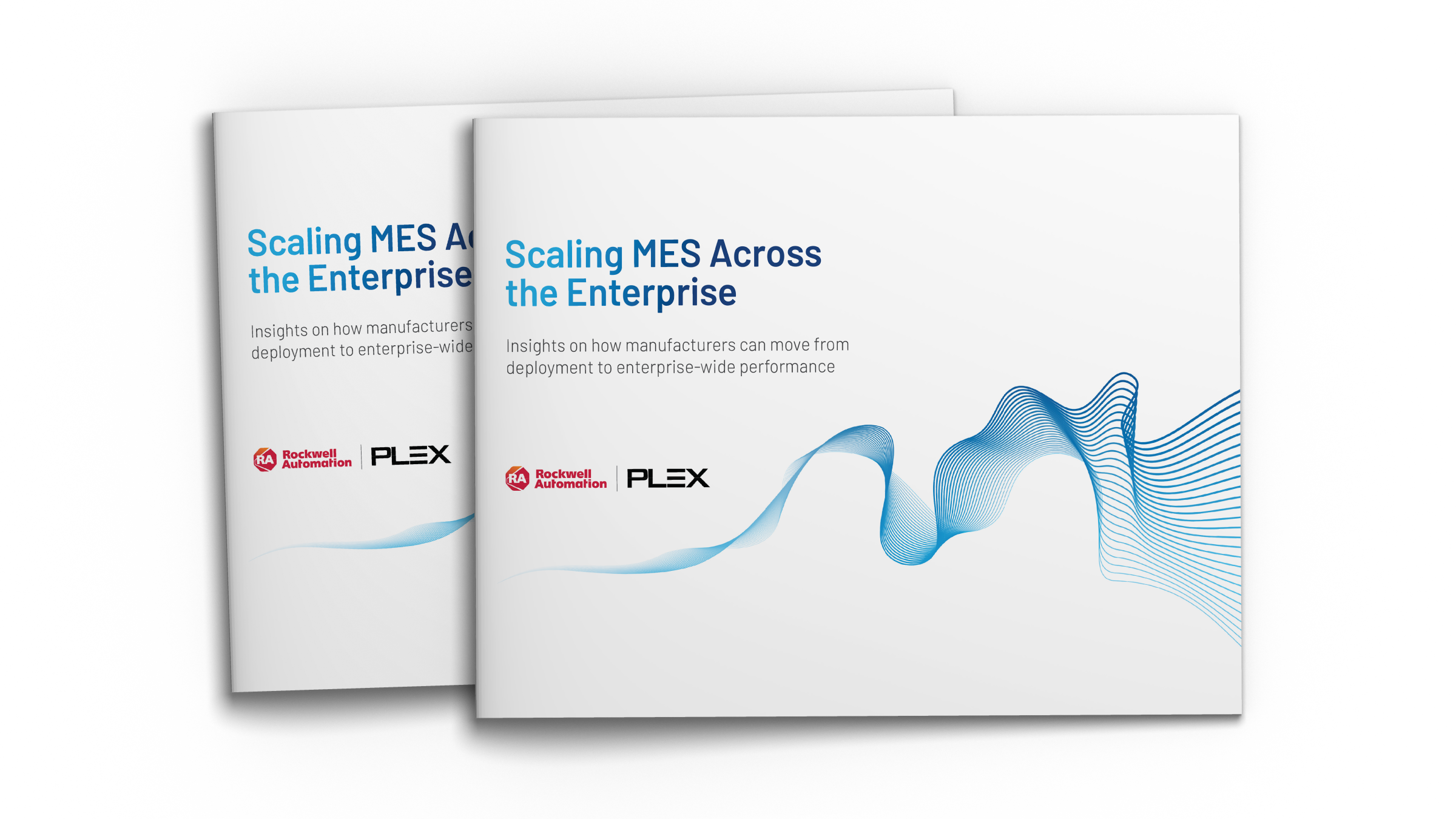
The Scaling MES Across the Enterprise Report revealed that deploying a manufacturing execution system (MES) across multiple sites has emerged as a challenge and barrier to success for many manufacturers.
In this kit, you will find 7 steps to scale MES and modernize your manufacturing operations. Click on any of the steps to view resources for your planning.
Step 1: Standardize MES across sites.
Scaling begins with consistency. Most manufacturers have deployed MES, but they miss this important first step: establish a standardized MES foundation across plants to eliminate variability and enabling scale value unrealized across the enterprise.


Step 2: Prioritize integration from the start.
Once a consistent foundation is in place, integration connects systems and eliminates silos. Integration should function as the foundation of digital transformation success — a first-order design decision rather than a downstream effort.
Connect MES with ERP, quality and OT systems early in the process to ensure data flows seamlessly across the enterprise.




Plex has just helped us with having everything on the computer and digitized. Because it’s always up to date or as live as can be and we can easily access it for any information that we need. Now everyone in the building has access to know where product is at any point in time. Which is huge... as you’re growing into a bigger and bigger company.

Find out how Plex was able to help Chocolate Shoppe Ice Cream drive manufacturing success.
Step 3: Align ownership across functions.
Scaling MES is as much an organizational challenge as it is a technology one. Once systems connectivity is in place, coordination becomes the next imperative.
Manufacturers must align teams, governance and decision-making across IT, OT and operations teams to standardize and execute successfully. Create common KPIs and metrics for cross department teams to ensure everyone works toward the same goals.


Step 4: Turn data into operational insight.
Collecting data is the starting point. Using it is the real challenge. After building the systems and processes to gather data consistently, manufacturers must move beyond simple visibility to gain real-time, actionable insights that inform decisions on the plant floor.
Embed analytics directly into operational processes to activate data within workflows — from triggering alerts to automating responses — and help frontline teams act on insights in real time.
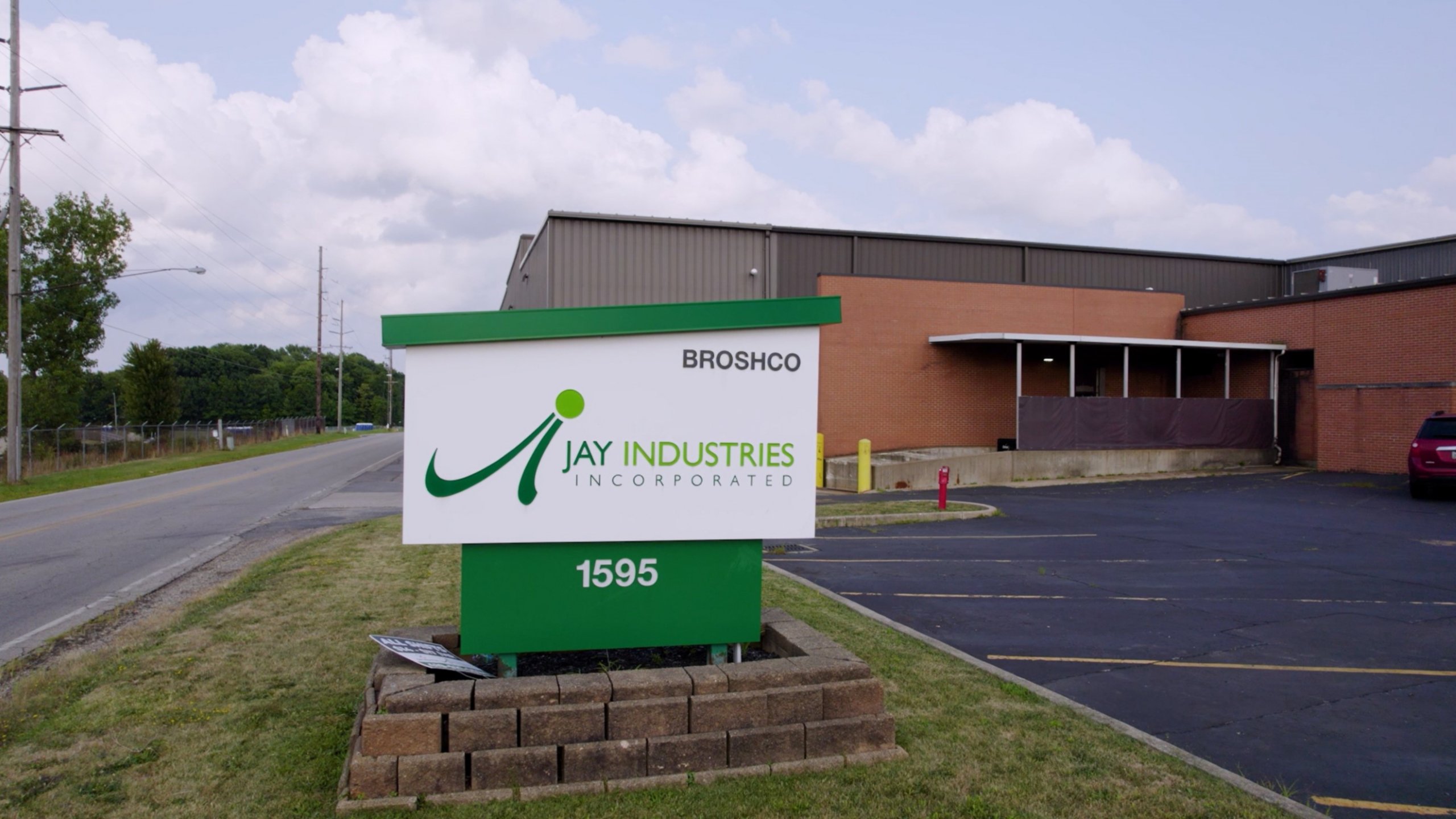



Discover how Plex helped Jay Industries drive better plant floor visibility and control.
Having the visibility of your sales, having the visibility of your manufacturing process, your production efficiencies, and what you have on-hand is crucial to any business that’s going to be operating in today’s environment. The data itself, and Plex’s ability to report that out, really changed how we run our business from a strategic standpoint.Paul Boggs, President and CEO, Jay Industries
Step 5: Build for AI-ready operations.
Forty-eight percent of manufacturers believe AI is delivering the biggest outcomes across the enterprise. As data becomes more accessible and actionable, manufacturers must build the critical foundation needed to move toward advanced capabilities.
Create a connected, contextual data environment to ensure AI can move from the experimentation phase to achieve scalable impact. The organizations that build this environment deliberately will extract the most value from their AI investments.



Step 6: Embed resiliency into the system.
One of the many problems with legacy systems is that resiliency exists outside the original system design, and it is difficult to layer it on after deployment. Modern MES strategies must incorporate security, compliance, and adaptability directly into operations to withstand disruption and scale with confidence.


Real-time data is a key factor in operational productivity improvements. A&O data is collected reliably from the shop floor using A&O then combined with Plex inventory and quality transactions, resulting in critical decision-making information. Prior to Plex this data was cumbersome to collect and subject to human error. Monitoring the following KPIs have resulted in a 10% increase in productivity and a 20% reduction in waste.

Praesent dapibus neque id cursus faucibus tortor neque egestas auguae eu vulputate magna eros eu erat.
Step 7: Empower employees to operate differently.
As technology evolves, so must the people who drive it. More than one-third (37%) of manufacturers identify change management as a key workforce obstacle. On average, 40% of workforces have participated in reskilling programs in the past year, and 39% of manufacturers are introducing AI and ML to address the skills gap.
Manufacturers must equip their workforce with the tools, training and processes needed to act on real time data and operate in more connected, automated environments. Building this training layer is an ongoing activity to enable continuous learning and improvement.



Scaling MES Across the Enterprise Report
Find out how manufacturers can move from deployment to enterprise-wide performance.