Loading
Case Study
Recent ActivityRecent Activity

7 Must-Have ERP Features for High Tech/Electronics Manufacturers

Share This:

LinkedInLinkedIn
XX
FacebookFacebook
PrintPrint
EmailEmail
Black and white close-up photo of a soldering iron tip working on an electronics circuit board

At a Glance

• High tech and electronics manufacturers are challenged to handle compressed product lifecycles, supply-chain agility, global visibility and constantly changing regulatory compliance.

• A new breed of ERP helps companies meet the specific challenges facing high tech and electronics component manufacturers.

• This paper summarizes must-have ERP features such as automated flow of documents, traceability, supply-chain management, integrated lean tools and more.

• By implementing these must-have features, manufacturers gain visibility into contract manufacturing and multi-site operations across the globe, and better manage supply-chain processes to ensure regulatory compliance.

PLEX.COM | 855.534.8012

White Paper

Market Challenges

Electronics and high tech manufacturers, contract manufacturers and Electronic Manufacturing Services (EMS) companies are under constant pressure to meet demands for innovative assemblies and products while increasing efficiency and quality.

Product lifecycles continue to tighten. The pace of product development requires complex, cost-efficient supply chains built for speed, agility and cost control. Customer, regulatory and sustainability mandates continue to grow more complicated.

Manufacturers must operate as efficiently as possible to maintain margins and thrive in this ever-changing industry. It’s imperative to gain visibility into contract manufacturing and multi-site operations across the globe, and better manage supply-chain processes to ensure regulatory compliance.

Solutions must help companies manage product lifecycles, supply-chain agility, global visibility and regulatory compliance.

Regulatory Issues

The regulatory environment puts a significant pressure on manufacturers.

Mandates such as the Restriction of Hazardous Substances Directive (RoHS) and the Waste Electrical and Electronic Equipment (WEEE) Directive require comprehensive reporting, tracking and up-to-the-minute data capture.

To meet the demands faced by high tech and electronics manufacturing companies today, organizations are wise to carefully evaluate manufacturing software systems targeted to meet their specific mandates. Comprehensive, easily configured features help companies handle compressed product lifecycles, supply-chain agility, global visibility and regulatory compliance.

PLEX.COM | 855.534.8012

Must-Have Solution Features

High tech and electronics manufacturers rely on software solutions to help them achieve a high degree of efficiency to accurately track all aspects of the manufacturing process and better manage their overall operations.

Today’s leading manufacturing solutions, like Plex Cloud ERP, go beyond the historical ERP strengths of finance and accounting to give organizations the ability to achieve complete process visibility — enabling them to meet their stringent requirements and avoid or minimize the impact of product recalls or delays.

Those must-have features include the following:

1) Automated Ordering and Document Control

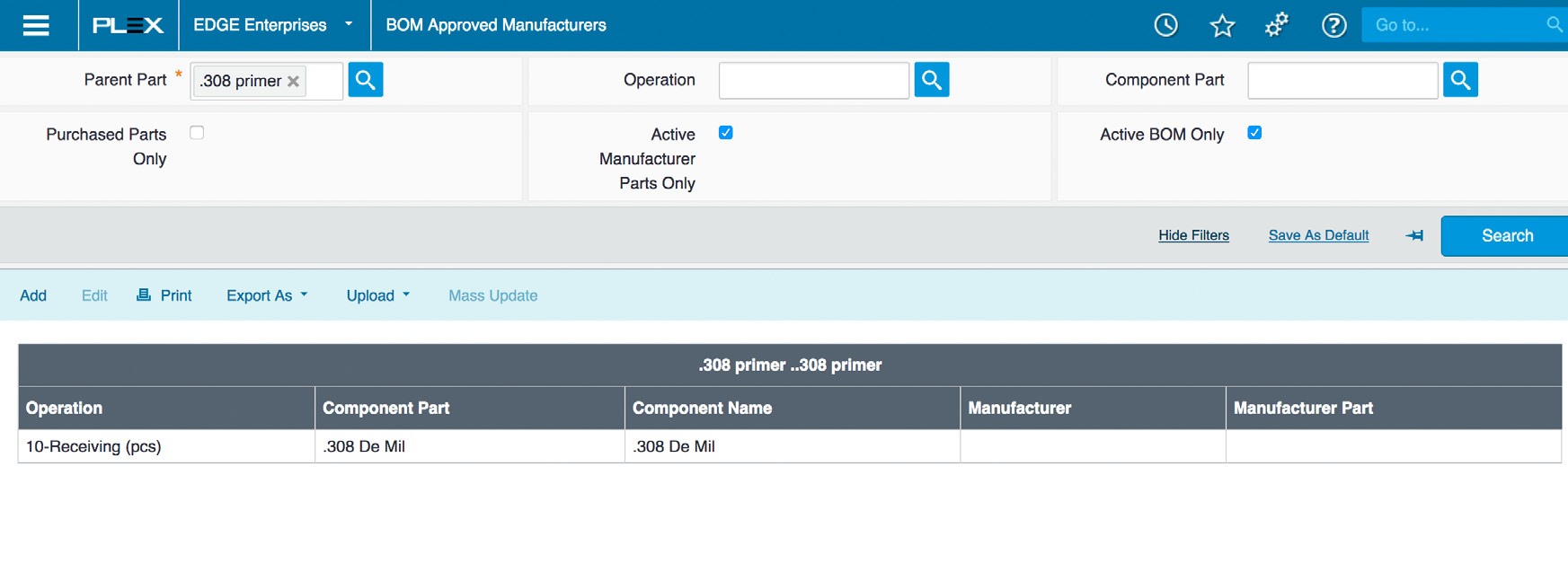
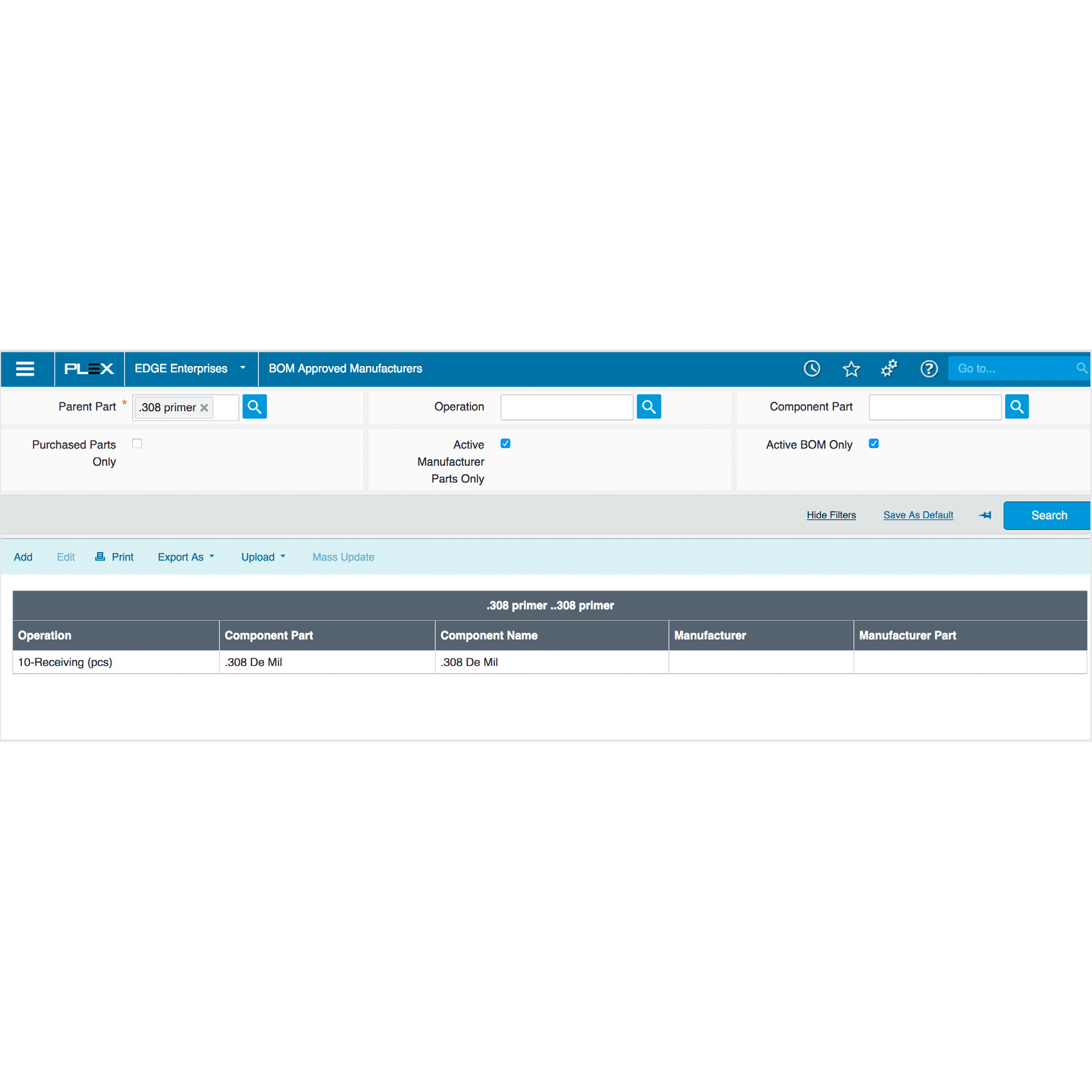
Solutions that automate Approved Vendor Lists, Bills of Materials, Engineering Change Orders, and other key manufacturing documents let manufacturers reduce errors and end inefficient manual data handling. By keeping an electronic Approved Vendor List (AVL), manufacturers stay current with the listing of all approved sources, in addition to part descriptions and part numbers.

blue and white manufacturing process flow diagram
software interface screenshot showing approved supplier list with columns for operation, component part, component name, manufacturer, and manufacturer part

Approved Supplier List

Companies accelerate new product introductions and time to market with automated flow of Printed Circuit Board/Printed Circuit Board Assemby (PCB/ PCBA) engineering designs into machine programs. Automating the flow of such documentation helps companies meet globally standardized processes and respond faster to changing market or competitor actions.

2) Features to Manage Complex Supply Chains

It’s critical that high tech and electronics manufacturers communicate in real time via a Web-based supplier portal. This allows them to share data with suppliers using a single solution, replacing manual methods including emails, phone calls and faxes. The goal is paperless, real-time communication across the supply chain to improve visibility, performance and operational excellence. Systems should provide the data and insight to reduce the amount of inventory on hand, while realizing significant logistics savings.

3) Solution Features for Tracking and Improving Quality

Solutions must make it easy to track Defects per Million Opportunities (DPMO) to identify failure points during high-speed PCB/PCBA production. This means the ERP system must automatically track failure modes and repeated failures for real-time process data and final test data.

Any quality solution must control and manage manufacturing and in-line quality processes. It is critical to identify, hold and dispose of non-conforming parts or defects from anywhere across the extended enterprise. The system should replicate and manage manufacturing business processes globally.

4) Features to Facilitate Lean Management

It is critical that high tech and electronics producers integrate lean tools to optimize complex global supply chains. Automated Electronic Pull Scheduler, Online Replenishment System and other functions help implement Lean across multi-line, multi-product, manufacturing facilities. A fully automated document control system allows for a paperless shop floor. ERP systems must help achieve a level-loaded flow of material that is demand-driven and mistake-proof. They must automate scheduling, shop-floor communication, inventory control, material traceability and production tracking throughout the enterprise.

5) Integrated Solution for Enhanced Traceability

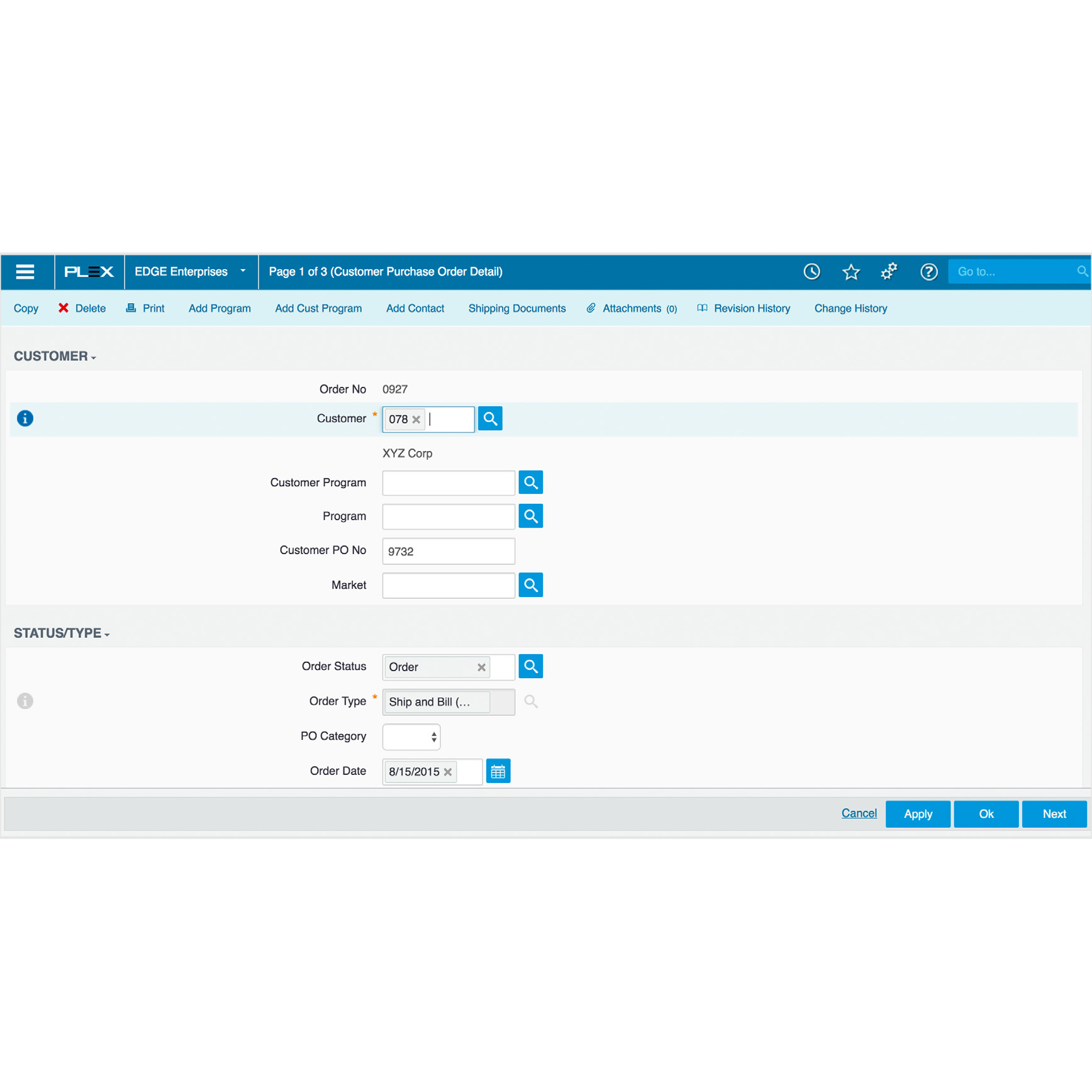
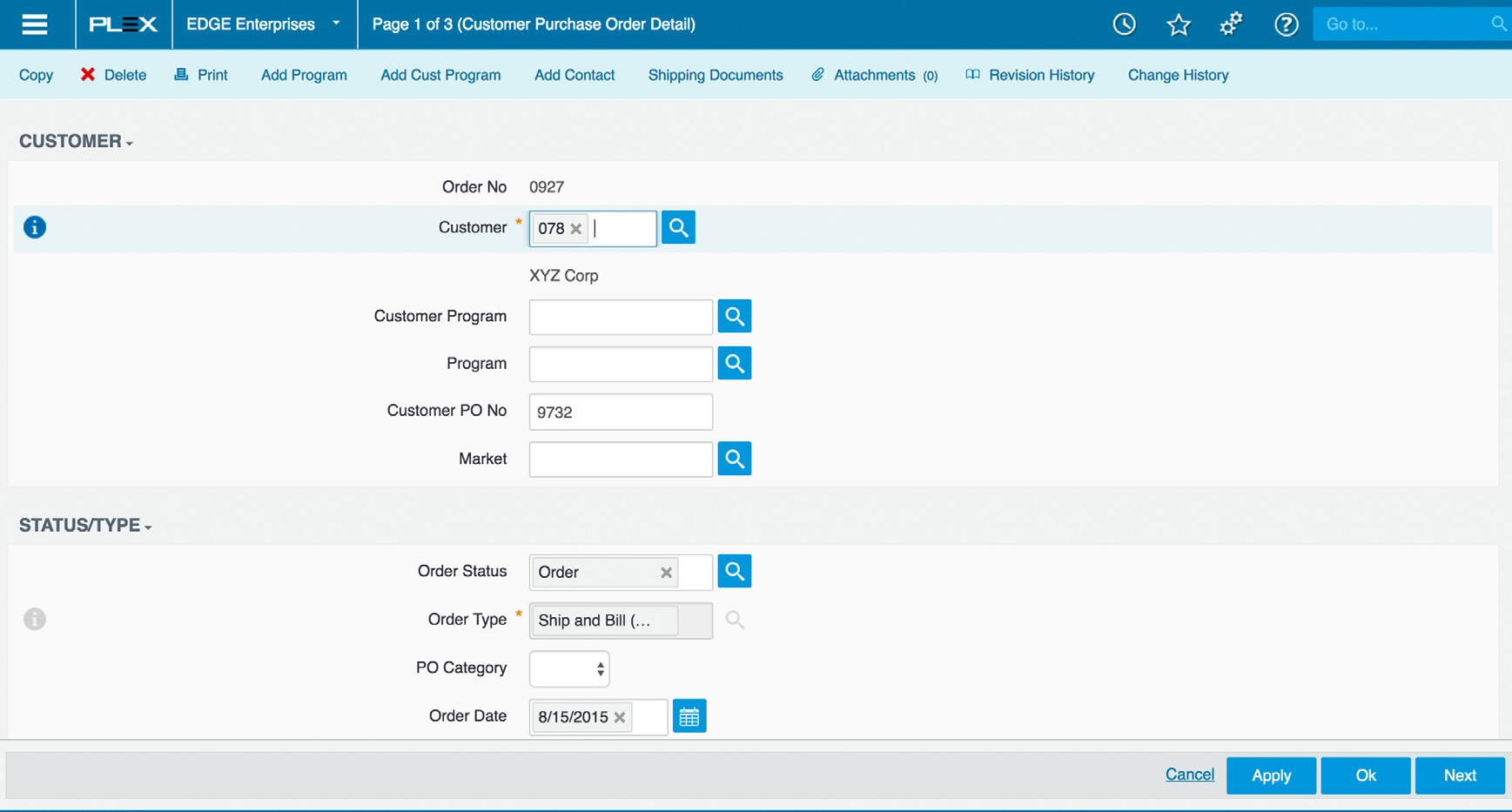
An ERP system must easily track product serialization, providing detailed product data through the entire process. It should be a simple matter to view component-level traceability on a PCB (or finished product assembly) to track defects and failures in the field, as in the sample below. Operators on the shop floor should be able to view a complete traceability tree of complex component builds. These features will help companies meet traceability reporting mandates required by OEMs.

Purchase orders track supplier and manufacturer’s part numbers.

6) Full Machine Integration

Most generic ERP systems can’t offer specific machine integration. Be sure features let you link Surface Mount Technology machine data with production and shop floor control. The system should track New Product Introduction (NPI) data, quality, inventory management, and other key production data.

A solution must fully integrate Product Lifecycle Management (PLM) functionality.

ERP system interface screenshot showing purchase order details and component-level traceability
ERP system screenshot showing purchase order details and component-level traceability tree

This lets companies enable quick-turn, complex PCB/PCBA assembly, and design reviews before manufacturing to prevent costly problems. It’s best to gain a real-time, continuous feedback loop among engineering/design, manufacturing and quality.

7) Improved Visibility

Finally, high tech and electronics manufacturers must implement a system that provides real-time visibility across the entire enterprise. This means it must be intuitive to track people, materials, machines, processes and suppliers.

As an example, the system should let workers automatically track production signals, alerts, KPIs and business intelligence. By capturing data as it happens, manufacturers get a clear view into the entire process.

An Advantageous Model

Any discussion of must-have ERP features must include a look at the cloud delivery model. With cloud ERP, high tech and electronics manufacturers avoid upfront investment in hardware, infrastructure, support and the need for software version releases, and costly IT support. Manufacturers gain access to the system anywhere in the world, at anytime, through a simple PC and Web browser.

Cloud systems also help capture everything that happens in a manufacturing plant as it happens. Production, scrap, downtime, quality, labor and maintenance activities are stored in the database for real-time decision-making. This provides one source of the truth for the entire organization.
Featured Resources

Loading
Loading
Loading